I can't remember the last time I wanted to read about a court case, and I probably can't express just how interesting this one is, but since the basics are already well known... you can probably understand how much more interesting this story is because you're already curious about the machinations of the govt and the mysterious force driving the govt agents to demonize and destroy Preston Tucker's car company.
We already know the general facts, that they succeeded, and that he never made another attempt to make a car company. But, just like a magic act, you're shocked enough that something extraordinary happened, right in front of you, and you now want to know the secret of how.
I did. And honestly, once I read to the middle of the book where the case was thoroughly written up, it was past my ability to stop reading for the night and get some sleep. Yep, I was hooked.
The author my not have your focused attention when he does chapters on Tucker's earlier life of selling cars, working with Harry Miller, and hanging around the Indy race track... but he knew how to fix my attention on the court drama. Wow, and how.
214 pages, and a photo section of 24 more pages with pictures that are a necessity to the story.
34 pages of notes on the sources of things and items called out in the book, like websites, books, posters, etc. And a bibliography. Well documented!
But, the amount of info in this book... is staggering. I've read documentaries before, and though they are all just stating the facts, I think this time it's more meaningful as it's putting the context of the struggle to create a company, and a car, and at the same time, battle for money, publicity, and against the mighty force that caused a nation wide scandal affecting every hopeful prospective buyer, dealer, and parts supplier that would be needed to launch a new car company, and give an incredibly innovative car the push to poke an eye in the big 3 car companies who had new nothing to offer the war weary Americans and vets who had to replace their 5, or more, year old cars.
Page 29 of the book says that 10 million new cars were ready to be ordered by owners tired of the car they'd had since before the war, and that 1/3 rd of the cars on the road were hardly worth more than scrap metal, only on the road due to no new cars to replace them with.
Now think about that a moment. Have you kept a car for more than 5 years? You know how they are starting to get run down after 4 or 5 years... right? But now consider that the cars that needed replacing were, at best, 1941 models. Most were older. If you hadn't bought a new car in the few years right before they stopped building cars in Detroit, you were most likely really fed up with a run down 6 or 7 year old car by the time the war was over and they were getting ready to make new cars again.
But, here's the thing. Ford, GM, and Chrysler weren't really going to make a lot of effort to design new cars, they were going to jump in where the left off, and quickly get back to building what was already a known quantity. They had nothing to do as far as logistics and supply to get back to making and selling cars. They went back to making 1941 and 42 designs.
But not Preston Tucker! He was starting from scratch, and not following in the old ways. He didn't have books and file cabinets full of blue prints, warehouses full of parts, and an assembly line ready with dies to form sheet metal. He only had a lot of experienced people working for him, and to accomplish the same goal, make a car that would knock the socks off the buyers in America. Trunk up front, away from the filthy exhaust pipes that would get soot and grim on the slacks, or dresses, of the driver getting things like groceries out of the trunk. His safety window would pop out, and not shatter, so the passengers could climb out if flipped over, and without glass shards.
Rear wheel drive without a transmission, so there were fewer parts to break, and a smoother acceleration. Front and back seat that were interchangeable so they were cheaper from a production point of view, and from an owners point of view they could be switched when the front started to show wear from more use than the unused back seat. For without kids and carpool passengers, those back seats don't get used much, not like the drivers seat does.
People were so excited to see the new Tucker car, they paid 48 cents admission, and after the 10 day event in New York, about $48,000 was raised to add to the funds to build more Tucker Torpedos.
The author, Steve Lehto, knows cars, and courts. He's written 9 other books already, several are award winning history books on topics as diverse as the Italian Hall disaster, the wrongful conviction of Timothy Masters, and the Chrysler Turbine Car.
He has been practicing Lemon Law and Consumer Protection for 23 years. He has handled cases for thousands of consumers. He wrote the Lemon Law Bible and taught at the University of Detroit-Mercy School of Law for ten years. He also frequently writes for "Opposite Lock" on Jalopnik (yeah, they didn't tell me I'd be helping the competition!)
and https://itunes.apple.com/us/podcast/lehtos-law/id937280934?mt=2 for 89 podcasts about lemon law, and many other buyer beware topics, like cloned VINs. Seriously, I've never seen a better source for educational automotive related topics... it's what they should have taught us in drivers ed.
His website http://lehtoslaw.com/ has lots of info about car law, like: the Lemon Law requires the manufacturer to pay your attorney’s fees and court costs on your behalf. That means: If you have a good case you will never have to pay attorney’s fees to enforce your rights under the Lemon Law.
curious and fearless Betsy is challenged to investigate a Bugatti Atalante that seems bewitched, since it caused the death of its former owners. This rare car coveted by collectors is the starting point of a classic adventure drawn by Jerome Phalippou.
The Drive varies between custom car scenes, European sports cars, hot rods, lowriders and widebodies. Featuring Ken Block, Magnus Walker, the Ringbrothers, ICON, Barris and many others.
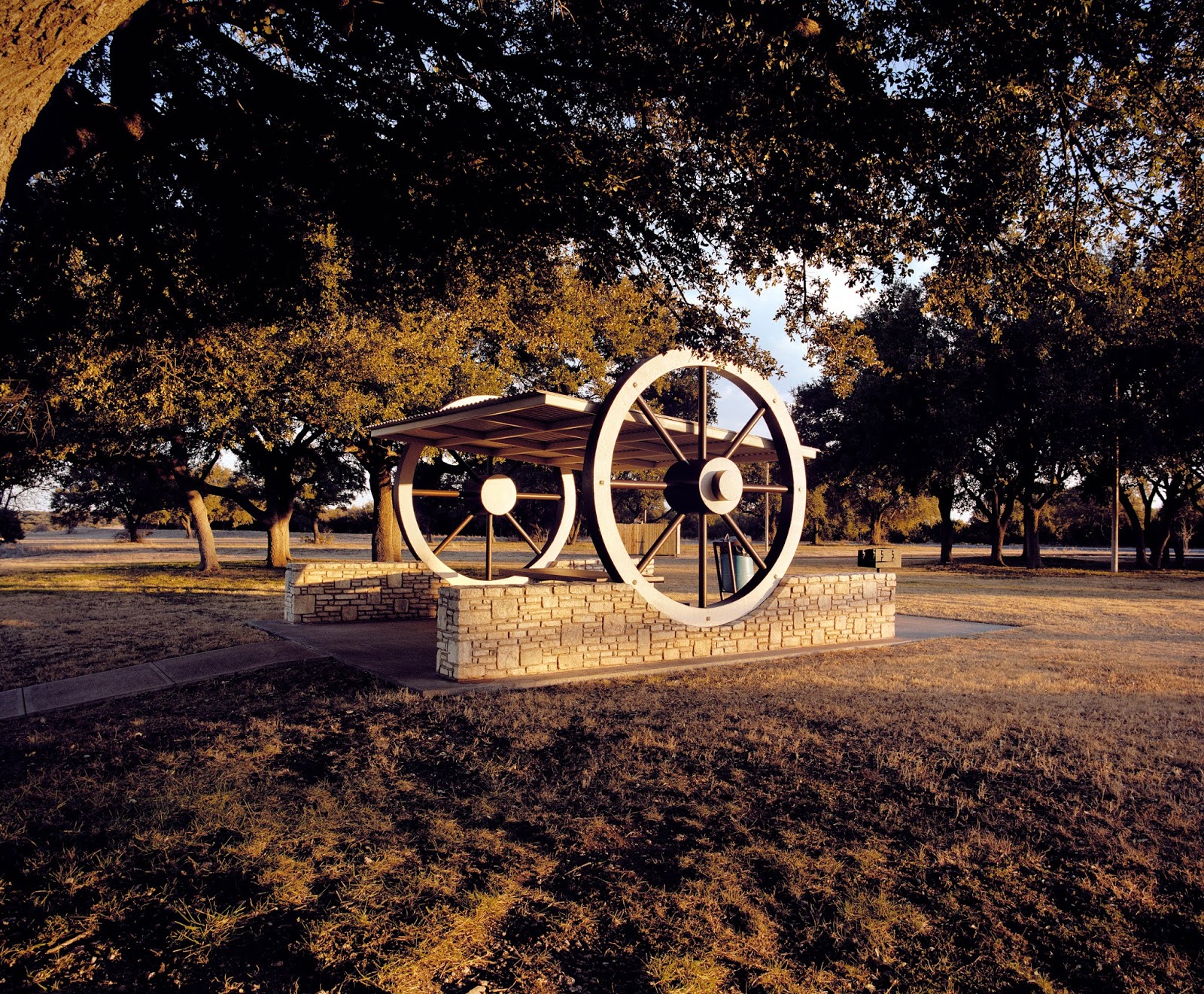
Photographs by Ryann Ford, from The Last Stop: Vanishing Rest Stops of the American Roadside, published by powerHouse Books.
On a solo road trip from California to central Texas along historic Route 66, in 2007, photographer Ryann Ford was struck by the multitude of humble, solitary mid-century rest stops built during the nation’s golden age of car travel. After doing some research, Ford was alarmed to learn that these rest areas were currently being closed and demolished all over the country due to budget cuts.
"It’s difficult for states to justify the tens of thousands of dollars a month required to mow the lawns and empty the trash cans, so unfortunately a lot of these old stops are being closed and demolished. I’ve even seen stops that seem very well preserved and well kept vanish overnight. It’s as if their historical and architectural significance is irrelevant, I wonder if it was even considered? Since I started this project in 2008, I’ve seen dozens and dozens of these stops vanish, and they are still vanishing today."
The Route 66 trip left Ford wanting more, so she set out on a quest to document as many of these locales as possible, all across the country, driving over 10,000 miles and photographing over 400 rest stops, all on film. Not all 400 are in the book, around 100 were selected.
What was the story behind these quirky and playful pieces of Americana, such as the mock adobe dwellings in New Mexico and faux oil rigs in Texas, which she passed by?
Many feel that these old rest stops are no longer necessary, and many were being closed and scheduled for demolition. Determined to capture as many as she could while they were still in existence, Ford did whatever she needed to gain access.
Collected together for The Last Stop: Vanishing Rest Stops of the American Roadside, Ford’s photographs take us on a memorable ride across the United States, visiting more than 75 different locales along the way. Included in the book are rest stops in Texas, New Mexico, Arizona, California, Nevada, Utah, Illinois, Kansas, Montana, Mississippi, Wyoming, North Dakota, South Dakota, Oklahoma, Nebraska, Minnesota, Iowa, and Missouri.
She funded her book via the Kickstarter website and was "blown away" when it easily clocked up pledges of more than $35,000 in a matter of weeks.
The book’s design is well executed and the 10″ x 12″ trim size of the book gives ample space for the photos. Each rest stop shown in the book has a corresponding geo-tag location and a dot on an adjacent map of where it is located along her journey.
The Last Stop does far more than capture the remarkable, effective design of our nation's road stops. It preserves a moment in time that is quickly fading, a unique period in the American travel experience when the journey was just as important as the destination. It's clear these modest structures did far more than provide picnic tables, they shaped our collective experience of golden-age car travel across the vast United States. http://www.ryannford.com/ http://ryannford.blogspot.com/ https://www.facebook.com/ryann.ford.5
After graduating from Brooks Institute of Photography in Santa Barbara, she landed the most unbelievable job on earth with Resorts and Great Hotels magazine, photographing hotels all over the world and eating free room service.
After a few years of living like a gypsy, she moved to Austin with her Chihuahua, Mr. Big. After arriving in Austin, she fell in love with the city and bought a bumper sticker that said “I’m not from Texas, but I got here as fast as I could.”
Now a photographer for clients like Better Homes and Gardens, The New York Times and Texas Monthly.