Showing posts with label history. Show all posts
Showing posts with label history. Show all posts
Tuesday, July 19, 2016


Wednesday, July 13, 2016
20 mule team hauling ore from Borate through Mule Canyon (Calico) to Daggett, Circa (pre-) 1890s)

https://www.facebook.com/neatoldphotos.m.lucas2/
These "big teams" pulled massive wagons hauling borax from the Harmony Borax Works near Furnace Creek to the railhead near Mojave, a grueling 165 mile, ten day trip across primitive roads. Although the teams only ran for six years--1883 to 1889--they have made an enduring impression of the Old West.
This is primarily due to a successful advertising campaign promoting 20-Mule-Team Borax Soap. Today you may see two of the last remaining wagons here in Death Valley. One is in front of the Furnace Creek Ranch and the other is at Harmony Borax Works.

http://kdminer.com/main.asp?SectionID=1&SubsectionID=1&ArticleID=64741

Thursday, July 7, 2016


Wednesday, June 22, 2016
the Birmingham Motors "No Axle" company bought the patents to the early 4 wheel independent suspension of the Blood Brothers of Kalamazoo, and built a superior car, doomed to be targeted by the corrupt US govt allies of the big 3

The company was so proud of its "no-axle" axle, that it challenged other makers to match their vehicles against the Birmingham on a stretch of road strewn with logs, replicas of corduroy roads.
Three transverse springs and an independent rear axle were combined with two transverse springs in front that made for a four-wheel independent suspension and the "easiest riding car ever put on the market," as advertising said. In the year of 1921, so few roads were paved, a smoother ride would guarantee incredible sales and profits.
According to The Examiner, July 26 1921, Birmingham Motors claimed, "this car is the easiest riding car ever built, regardless of price, and a car that will practically double the speed of other cars over rough roads." It was also noted that the rigid chassis coupled with the light-weight body was revolutionary.
The Birmingham also offered exterior finishes of DuPont Fabrikoid through a process called Haskelite, instead of paint.
Because the suspension system was similar to that which had appeared on the Cornelian built by the Blood Brothers in Kalamazoo, Cyrus E. Weaver, the designer of the Birmingham, purchased all relevant patents held by the Blood Brothers.
The first Birmingham prototype sedan was completed and tested in Detroit in May of 1921, but already Jamestown, New York, had been selected as the factory site. The mayor of Jamestown, Samuel A. Carlson, agreed to serve as president of Birmingham Motors Corporation, accepting no salary for the position. Because he believed Birmingham would do for Jamestown what Franklin had done for Syracuse (and even, grandiosely, what Ford had done for Detroit), Carlson asked only for out-of-pocket expenses for promoting this new industry for his community.
Charles A. Towne (who had served in both houses of the U.S. Congress and who had run for the vice-presidency of the United States with Williams Jennings Bryan) came aboard as counsel. Stock was selling like hotcakes. But Mayor Carlson soon fell victim to his political enemies. Already a defamatory article about the company had appeared in the stock market publication "US Investor".
Initially it was thought this malicious piece of journalism could be turned to Birmingham's advantage. But in August 1922 the AP wire service buzzed with the news that a Federal grand jury in Washington had filed a presentment following a 10-month investigation by the U.S. Post Office.
Motor Age magazine - Aug. 12 1922
Charged with having sold worthless stock to the amount of more than $300,000 to Virginia, Maryland and District of Columbia investors, through misrepresentation, 18 officials of the Birmingham No-Axel Motors Corporation were indicted by the federal grand jury, on a specific charge of violation of federal statute No. 215, involving misuse of the United States mails. The indictment against the company officials returned as a result or more than ten months' Investigation by the Post Office officials who charge that agents of the company sold hundreds of thousands of dollars worth of stock on fictitious holdings and on promises which, according to the government's case, "the said Birmingham Motors knew never would be complied with."
The charge was fraudulent use of the mails to sell more than $300,000 of worthless stock, and among the 18 Birmingham men named was Mayor Samuel Carlson. Newspapers not friendly to Carlson had a heyday.
During the next two months Birmingham assembled 26 cars and chassis to prove its viability. But a stock holders meeting in October ended in bedlam, with one local stock salesman stabbed to death.
A Birmingham official smashed his way through a plate- glass window to escape.
In June of 1923, the indictment against Birmingham officials was dismissed in court.
But the exoneration came far too late for Birmingham Motors. A valiant attempt was made to generate favorable publicity with a Duesenberg-engined special-built Birmingham race car to compete in the 1923 Indianapolis 500, but the money ran out before it could be completed.
In December mortgage foreclosure arrived.
As many as 50 Birminghams may have been built during the contentious short life of the company. None of the cars are believed to exist today.
Preston Tucker and John Delorean did not pay attention to history, and were similarly doomed to repeat the knock out punch from mystery sources in the US government which conspired to end the competition to the big 3; Ford, Chrysler, and GM
http://scripophily.net/bimotral19.html
https://en.wikipedia.org/wiki/Birmingham_Motors
http://www.earlyamericanautomobiles.com/americanautomobiles21.htm
http://www.thepeterboroughexaminer.com/2014/01/11/building-the-birmingham-how-peterborough-almost-became-an-automobile-manufacturing-centre-in-the-1920s
Ford's power, based on what he could achieve if vexed at other manufacturing industries, 1922
Aug. 28 1922
Henry Ford decided that the price of coal was being manipulated by wall street investors, and that he would stop all manufacturing, and put 1 million men out of work until the price was returned to what he felt was honest. He found that $6.50 a ton was more than he would be able to abide, and would not buy any more parts from his 2200 suppliers until the price of coal was back to $4.50 a ton, and with all his employees, in all his factories, all across the USA... he alone had the power to change the way America was going to respond to his whim.
"Declaring that Wall Street manipulators are responsible for the coal shortage, Henry Ford has ordered the closing of all his plants on Sept. 16. He states that he will not reopen them until he can obtain coal at what he considers a fair price.
Telegraphic notices have been sent to about 2,000 sources of supply to cease shipment until further notice. A formal notice signed by Edsel Ford states: "On account of coal shortage we will be unable to operate our plants after Saturday, Sept. 16. No material will be received if shipped other than as detailed in the letter following."
It is estimated that the closing of the Ford plants will be responsible for the laying off of more than 1,000,000 workmen. There are approximately 50,000 employes at the Highland Park plant, 20,000 at the River Ronge and other Detroit plants, and 30,000 at Ford branches throughout the country. There are 1,600 plants scattered throughout the country whose principal business is the supplying of parts and materials for Ford cars. Henry Ford reiterated the statement this morning that he will not pay excessive prices for steel or coal.
He stated that he could get coal if he were willing to pay over the market price and that he had been offered 60,000 tons at $6 a ton. He refuses to pay more than $4.50 a ton. Ford has sufficient coal on hand to operate until Sept. 16 and then to keep the factory ovens and boilers warm for an indefinite period.
Ford production has been running in excess of 5,000 cars a day. None of the other Detroit factories are affected as seriously as Ford. When asked when the plants would resume. Ford stated that he had no idea and that the situation seemed to him impossible.
Going into the closing period, the Ford company declared there were no stocks of new cars in its branches or dealer salesrooms throughout the country and that the closing was prompted solely by the coal and steel situations.
Retail sales in the summer of 1922 and up to the closing day have been about 5,000 a day, maxing out the capacity of production facilities.
Motor Age magazines, August and Sept of 1922
http://www.earlyamericanautomobiles.com/americanautomobiles21.htm
Henry Ford decided that the price of coal was being manipulated by wall street investors, and that he would stop all manufacturing, and put 1 million men out of work until the price was returned to what he felt was honest. He found that $6.50 a ton was more than he would be able to abide, and would not buy any more parts from his 2200 suppliers until the price of coal was back to $4.50 a ton, and with all his employees, in all his factories, all across the USA... he alone had the power to change the way America was going to respond to his whim.
"Declaring that Wall Street manipulators are responsible for the coal shortage, Henry Ford has ordered the closing of all his plants on Sept. 16. He states that he will not reopen them until he can obtain coal at what he considers a fair price.
Telegraphic notices have been sent to about 2,000 sources of supply to cease shipment until further notice. A formal notice signed by Edsel Ford states: "On account of coal shortage we will be unable to operate our plants after Saturday, Sept. 16. No material will be received if shipped other than as detailed in the letter following."
It is estimated that the closing of the Ford plants will be responsible for the laying off of more than 1,000,000 workmen. There are approximately 50,000 employes at the Highland Park plant, 20,000 at the River Ronge and other Detroit plants, and 30,000 at Ford branches throughout the country. There are 1,600 plants scattered throughout the country whose principal business is the supplying of parts and materials for Ford cars. Henry Ford reiterated the statement this morning that he will not pay excessive prices for steel or coal.
He stated that he could get coal if he were willing to pay over the market price and that he had been offered 60,000 tons at $6 a ton. He refuses to pay more than $4.50 a ton. Ford has sufficient coal on hand to operate until Sept. 16 and then to keep the factory ovens and boilers warm for an indefinite period.
Ford production has been running in excess of 5,000 cars a day. None of the other Detroit factories are affected as seriously as Ford. When asked when the plants would resume. Ford stated that he had no idea and that the situation seemed to him impossible.
Going into the closing period, the Ford company declared there were no stocks of new cars in its branches or dealer salesrooms throughout the country and that the closing was prompted solely by the coal and steel situations.
Retail sales in the summer of 1922 and up to the closing day have been about 5,000 a day, maxing out the capacity of production facilities.
Motor Age magazines, August and Sept of 1922
http://www.earlyamericanautomobiles.com/americanautomobiles21.htm
Tuesday, June 21, 2016
I hope someone tells Rolls Royce prototype designers that tiny detail about streamlining the front tires... it changes the aero dymanics a lot when you turn them... aka the Stutz Blackhawk effect
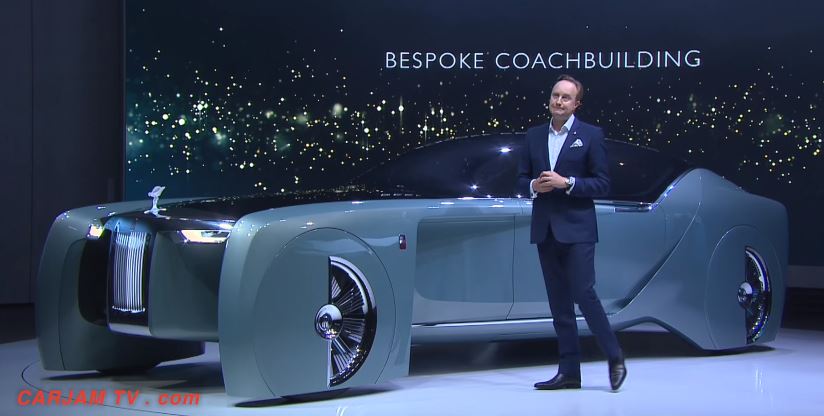
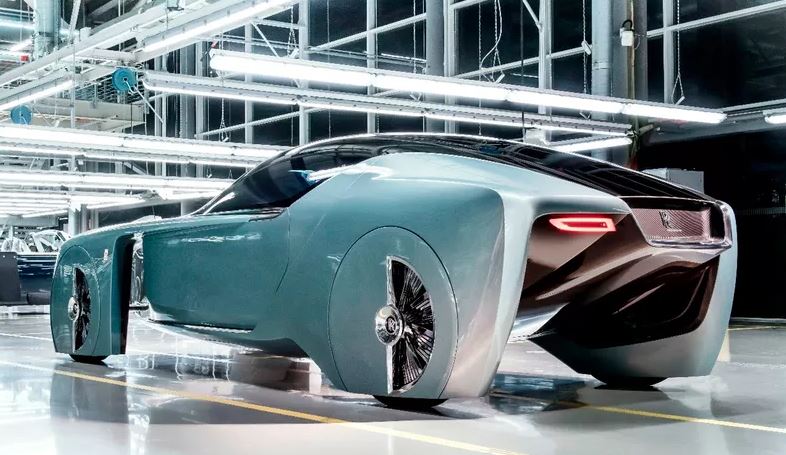
Rolls Royce Motor Cars has unveiled a concept car that showcases what the firm thinks luxury vehicles might look like in 100 years' time. The "Vision Next 100" is a 5.9 metre-long zero-emission, self-driving car complete with an artificial intelligence virtual assistant and a silk sofa – but no steering wheel.

Keep in mind the following is a 360 degree video, pull it around
http://phys.org/news/2016-06-rolls-royce-luxury-vision-future.html
http://www.gizmag.com/rolls-royce-concept-vision-next-100/43893/
The Stutz effect I mentioned in the title? That's due to what they learned when land speed racing on Daytona Beach with the Stutz Blackhawk.

At 220, it went barrel rolling... you simply can't change the aero at that speed without disastrous effect

http://justacarguy.blogspot.com/2011/10/no-info-was-with-this-streamliner-so-if.html
Friday, June 17, 2016
tractor racers Ab Jenkins and Barney Oldfield, publicity men for Firestone tires and Allis Chalmers

It was in 1932 that Harvey Firestone, owner of Firestone Tire, had three Allis-Chalmers tractors built, not for their pulling power, but for speed. They were the first tractors to be fitted with rubber tires.
Firestone hired celebrity race drivers, including Jenkins and Barney Oldfield, one of the most famous of the early auto racers, to engage in tractor races at county fairs and agricultural events.
Famed race car drivers like Frank Brisko, Barney Oldfield, and Ab Jenkins performed in front of an estimated 1 million people during 1933 alone.
http://www.agriculture.com/machinery/tractors/antique-tractor/allischalmers-u_201-ar15591

http://blog.hemmings.com/index.php/2009/09/15/land-speed-tractors-oldfield-v-jenkins/comment-page-1/#comment-9772041
There were promotional field demos, pairing a Model U on steel against one on rubber. And to literally drive the point home a fleet of U’s equipped with a high-speed fourth gear raced at tracks across the country.


Firestone believed the high-speed tractors would be a way he could show farmers that his rubber tires were a technical marvel, not a gimmick.
The agriculture market was skeptical of the new rubber tires. Tractors, at the time, ran on metal rims.
Firestone hired celebrity race drivers, including Jenkins and Barney Oldfield, one of the most famous of the early auto racers, to engage in tractor races at county fairs and agricultural events.
Jenkins eventually took one of the tractors to Bonneville Salt Flats to set a land-speed record. In 1935, he drove the tractor at 68 miles per hour through a one-mile course. He later was given a belt bucket inscribed, "The World's Fastest Farmer."

Eldon Kearl, who facilitated the loan of the tractor, said his research shows the tractor was purchased by a farmer, who found that it had no power but could go fast. It was later purchased by an Ohio man, Randall Sheffied, who planned to use the tractor to plow fields. He, too, found the tractor had no pulling power but went much faster than he wanted. Research told him the tractor was not meant to plow fields but to race.
http://www.deseretnews.com/article/595096478/This-tractor-was-built-for-speed.html?pg=all
http://antiquetractorsforum.com/showthread.php/84-Allis-Chalmers-first-in-rubber-and-racing

War, a New Era, and Depression, 1914-1940 By Paul W. Glad
Tuesday, June 14, 2016
In 1967 Porsche lobbied the SCCA to reclassify the 911 as a sedan. LAA-AAME! That's 2 syllables for a 2 syllable car company name /por-sha/
Then it could finally dominate the Under 2-Liter field, and only then did it win the manufacturers' championship over Alfa Romeo.
https://en.wikipedia.org/wiki/Trans-Am_Series#Beginnings_.281966.E2.80.931967.29
https://en.wikipedia.org/wiki/Trans-Am_Series#Beginnings_.281966.E2.80.931967.29
Friday, June 10, 2016


Thursday, May 26, 2016

Subscribe to:
Posts (Atom)